

We explore the reasons why at times you might use a squat pot or tall bag rather than a standard height one. Simply put, a squat plant container is defined as being shorter than a standard height. Additionally if a pot is called a tall pot, it is literally taller than the standard height. If it is a bag, and measured by litres, the squat will also be wider than the standard so that the volume remains the same (i.e. a 45 litre bag is slightly taller and narrower than a 45 litre SQUAT bag).
There are a few main types of plant containers that you can choose from. Each has it’s own purpose;
- Pots
- Bags
- Trays
- Punnets
POTS:
Pots seem to be the most common form of container growing. Pots are measured by diameter (straight across the top) which will stay the same for both squat and standard, and so will just vary in height. That can have a substantial bearing on the volume of the pot.
Firstly, we have established that you can choose (where available) to use either ‘Squat’, ‘Standard’ or ‘Tall’. So let’s have a look at why growers might want to buy one over the other.

Plants come in so many forms and sizes. From Australian Natives, to Grasses, Orchids and Succulents, the growing habits and root structures can differ quite a lot! Let’s look at a couple of those to discuss why they like a shallow container.
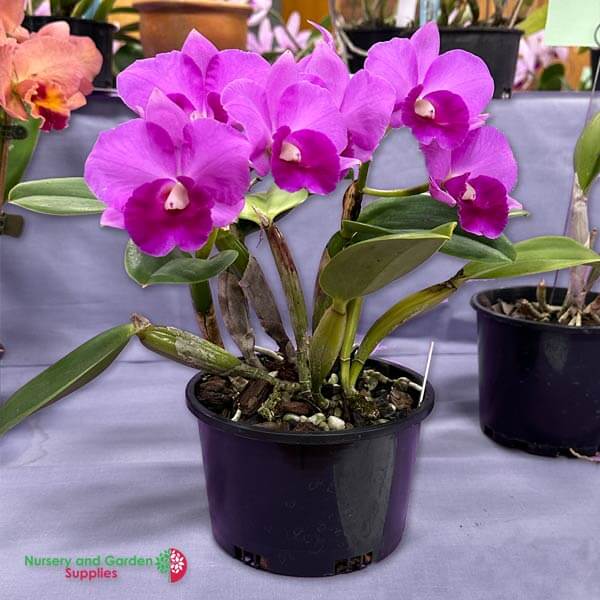
ORCHIDS & SUCCULENTS: Apart from a certain few varieties, generally growers will be looking for a much shorter pot than the standard.
Orchids and Succulents prefer shallow pots for several reason:
Airflow to Roots – Many orchids, especially epiphytic ones (like Phalaenopsis and Cattleya), naturally grow on trees, with their roots exposed to the air. A shallow pot allows better aeration, preventing root rot.
Prevents Overwatering – Deep pots can tend to retain more moisture, which in turn can lead to root rot in orchids. Shallow pots dry out more evenly and prevent excess water from hanging around. Succulents are also highly sensitive to overwatering.
Mimics Natural Habitat – Many orchids grow in leaf litter or attached to tree bark, where their roots remain relatively shallow rather than buried in deep soil. Many succulents grow in arid environments where soil layers are thin and water drains quickly.
Shallow Root System – Most succulents have shallow, fibrous roots that spread out rather than grow deep. A shallow pot provides the right amount of space for their roots to thrive without excessive soil.
Encourages Offsets & Propagation – Many succulents, like Echeveria and Sempervivum, produce “pups” (offsets) around the base. A shallow pot makes it easier for these new growths to develop and spread.
PLANT BAGS:
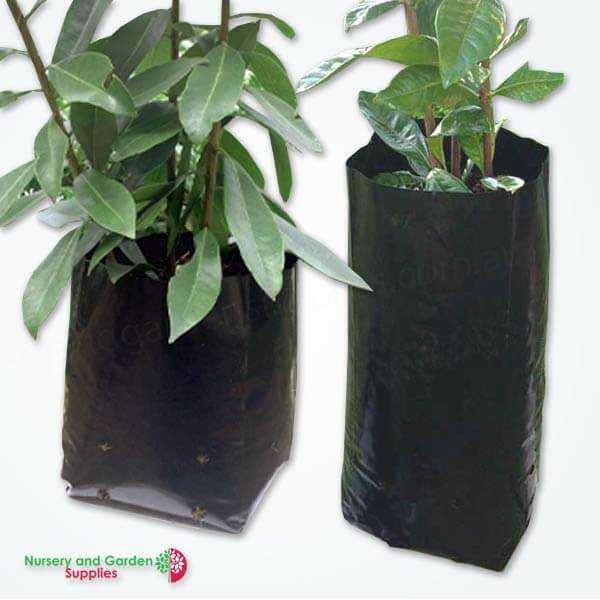
The use of bags for larger container stock has grown steadily over the past few decades with the introduction of the woven bags with handles. The Black poly bags (pictured left) have been around a bit longer – made from the builders film material. The bag on the left is a 5 litre Squat bag, and the bag on the right is a 5 litre Tall bag.Both contain the same amount of soil, but are very different shapes.
Plants like Fruit trees and Some Palms are often grown in a taller bag, whereas many shrubs and other plants are grown in either a standard height or a squat height bag.
PLUG TRAYS:
Many varieties of flowers, shrubs, herbs, vegetables and even trees start their life as a seed or cutting that is grown in a plug tray. A plug tray is simply a tray with many cells acting like tiny pots – all organised in rows built into a tray. Usually used more by growers looking to sell large number of the same variety, they will also learn which ones like taller or shorter cells.
Trees with deeper root systems: Many plant, such as Australian Natives, Fruit Trees and many Palms actually need a deeper pot than the standard.
Deep Root Systems – Many Australian natives, especially those from arid or drought-prone regions, develop deep taproots to access underground moisture. A deep pot allows these roots to grow naturally.
Drought Resistance – many plants have become more become more drought-tolerant by reaching stored water in lower soil layers.
Better Drainage – Many Australian soils are sandy or well-draining, and deep pots help replicate this by allowing excess water to move away from the root zone, preventing waterlogging.
Prevents Root Disturbance – Some Australian natives, particularly those in the Proteaceae family (like Banksia and Grevillea), have sensitive roots that dislike disturbance. A deep pot helps their roots establish properly before transplanting.
Encourages Stronger Growth – Deep-rooted natives, like Eucalyptus and Acacia, benefit from deeper pots as they develop stronger, more resilient root systems, leading to healthier plants when planted in the ground. With adequate root space, fruit trees grow stronger as well.
Higher Yield – Deeper plant containers can ultimately help trees yield more fruit compared to being in a cramped or shallow container.
Longevity – Many trees are perennials that can live for many years. A deep pot allows them to grow healthier and longer before needing repotting or transplanting into the ground
PUNNETS:
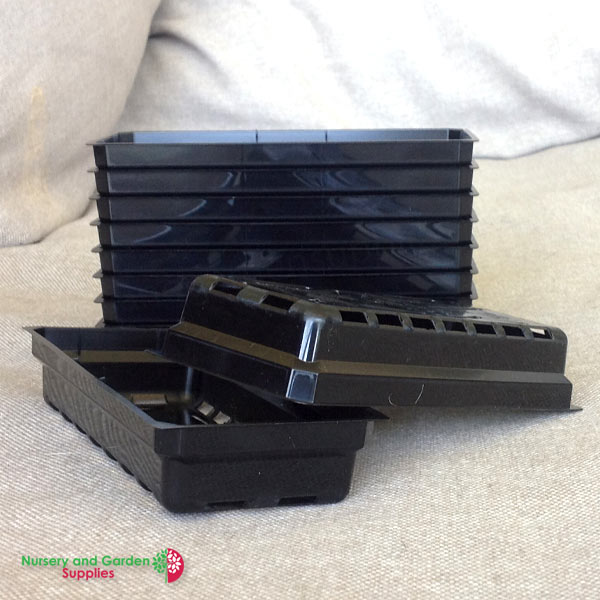
The explosion in popularity of Microgreens has called for the creation of punnets much shallower than their older, deeper counterparts.
Microgreens grow quickly and have small, delicate root systems that don’t require deep soil. A shallow punnet provides just the right amount of space for their roots to spread.
Since microgreens are harvested within 7-21 days, they don’t need deep soil. A shallow punnet minimises wasted potting mix while still providing enough nutrients.
The microgreens are then easier to cut at the base without digging deep into the soil if you are using a shallow punnet.
I hope that some of this article has helped you understand which container is right for your plants! Happy growing to you all!
*** Disclaimer: This blog shares the writer’s personal thoughts and experiences. (either the marketing or technical department). It is not meant to be professional advice or step-by-step instructions. Please use your own judgment and do your own research before acting on any information here.